
Type & Hit Enter to search
Need Help ?
Call: 202.285-3238
Type & Hit Enter to search
Need Help ?
Call: 202.285-3238

$104.75
PRODUCT ID : RCJC08
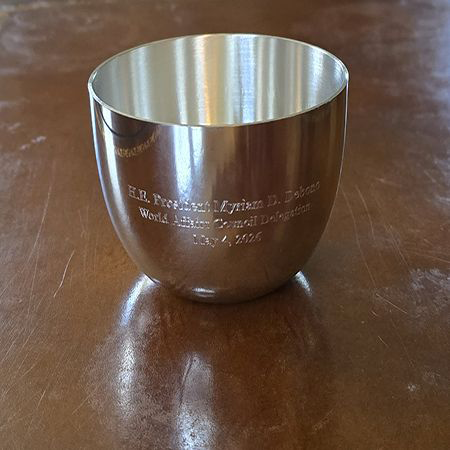
The history of the Jefferson Cup begins with a gesture of friendship and a touch of Thomas Jefferson's signature penchant for design. In 1806, George Wythe, Jefferson's law mentor and a signer of the Declaration of Independence, bequeathed two large silver cups to his former student. Finding the original pieces a bit cumbersome for daily use, Jefferson sent them to Richmond silversmith John Letelier in 1810 with specific instructions. He requested that the two cups be melted down and refashioned into eight smaller, low-profile tumblers that were roughly two and five-eighths inches tall. These new vessels featured a rounded, weighted bottom for stability and a gold-lined interior to prevent the silver from tainting the flavor of the wine or cider served within them.
Once delivered to Monticello, these cups became a permanent fixture at Jefferson's dinner table, valued for their durability and elegant simplicity. Over the centuries, the design transitioned from a private household item to a broader cultural icon, particularly within the state of Virginia. While the original surviving cups are kept as historical treasures, the style became a popular gift choice for graduations and weddings, often rendered in pewter for its classic look and ease of maintenance. Today, the Jefferson Cup remains a symbol of American neoclassical design, bridging the gap between early 19th-century utility and modern tradition.
The traditional art of diamond drag engraving is a meticulous process that relies on the steady application of pressure and the unmatched hardness of a natural diamond. The vessel is first nestled into a specialized rotating cradle, ensuring the curved surface is perfectly aligned for the craftsman's tools. As the engraver guides the diamond-tipped stylus across the metal, the stone does not merely scratch the surface; it deeply displaces the material, carving out elegant, V-shaped channels with absolute permanence. This physical "incising" of the metal burnishes the edges of each letter, creating a brilliant, reflective quality that catches the light far more vividly than modern surface markings. The result is a tactile, deep-set inscription that can be felt with the fingertip, a timeless technique that ensures the commemoration remains as enduring and dignified as the Jefferson Cup itself.
The traditional art of diamond drag engraving is a meticulous process that relies on the steady application of pressure and the unmatched hardness of a natural diamond. The vessel is first nestled into a specialized rotating cradle to ensure the curved surface is perfectly aligned for the craftsman's tools. As the engraver guides the diamond-tipped stylus across the metal, the stone does not merely scratch the surface but deeply displaces the material to carve out elegant, V-shaped channels with absolute permanence.
This physical incising of the metal burnishes the edges of each letter and creates a brilliant, reflective quality that catches the light far more vividly than modern surface markings. Your purchase includes this specialized service for an inscription of up to three lines of text, resulting in a tactile, deep-set finish that can be felt with the fingertip. This timeless technique ensures the commemoration remains as enduring and dignified as the Jefferson Cup itself.

Payment methods accepted


Billing Questions please call 202.285-3238
Sign up for patriotic promotions, secret discounts, and our newsletter.



Call Us:
202.285-3238
Washington DC Souvenirs
Terms and Conditions
Privacy Policy
Contact Us